Jeesuksen sanat "MINÄ OLEN HÄN" on tulkittava Johanneksen evankeliumin ensimmäisten sanojen valossa. Lukiessamme Johanneksen evankeliumin ensimmäistä lukua, voimme tuskin olla huomaamatta, miten se vilisee "hän"-sanoja.
I think that Jesus' words "I AM HE" must be interpreted in the light of the first words in the Gospel of John. When we are reading John's gospel we can't help finding who many "he" words there are.
Ensimmäisessä jakeessa Johannes kirjoittaa Jumalan "sanasta", joka oli/toimi alussa "Jumalan kanssa". Tuon lyhyen esittelyn jälkeen Johannes käyttää tuosta jumalallisesta toimijasta toistuvasti persoonapronominia "hän".
In the first verse John is writing about God's "word", which was/acted in the beginning "with God". After this short introduction John uses repeatedly the personal pronoun "he" when speaking of that divine actor.
Johanneksen käyttämä kieli on lyhyttä ja ytimekästä, ja ehkä hänen valitsemansa tyyli ja kirjoitustapa on ollut suorastaan tarkoitushakuista, jotta lukija osaisi yhdistää Jeesuksen sanat "minä olen hän" hänen omaan alustukseen "Jumalan sanasta".
John's language is short and concise and maybe he has chosen his style and writing downright purposefully in order to make easier for the readers to connect Jesus with "God's word" mentioned in his introduction.
Kuten jo aikaisemmin kirjoitin, ymmärrän, että Jeesus puolestaan halusi herättää "minä olen hän"-sanoillaan kuulijoissaan muistikuvia Jesajan tekstistä, jossa on ennustus "Jumalan palvelijan" nimestä. Kun Jes. 42: 8:sta poistetaan siihen mitä ilmeisimmin lisätty sana "Herra", jäljelle jää lause: "Minä olen hän, se on minun nimeni" (kts. edellinen kirjoitukseni).
As I mentioned before I can understand that Jesus for his part wanted to remind his listeners about Isaiah's text about "God's servant" with his words "I am he". When we take off the word "Lord" (the added word as I suppose) from Isa. 42: 8, we can read "I am he, it's my name" (look at my previous writing).
Pelastus keskittyy persoonapronominin "hän" ympärille, kun taas luominen keskittyy persoonapronominin "minä" ympärille.
Salvation is focused around the personal pronoun "he" and creation around the personal pronoun "I".
Koska Jeesuksen sanat Joh. 8: 28: ssa ("Minä olen hän, joka minä olen") ovat lähes toisinto Mooseksen palavan pensaan luona kuulemista sanoista (2. Moos. 3: 14), ymmärrän, että Jeesus halusi korostaa myös yhteyttä itsensä ja Ehjeen välillä.
Because Jesus' words in John 8: 28 (I am he who I am) are almost repetition of the words Moses heard by the burning bush (Ex. 3: 14), I can understand that Jesus wanted to emphasize the connection between himself and Ehyeh.
Mutta Johanneksen evankeliumissaan esittelemä "hän" viittaa Mooseksen erämaakokemustakin kauemmaksi. Nimittäin ensimmäisen kerran "hän" on esitelty ihmiskunnalle ensimmäisessä evankeliumissa, joka annettiin Aadamille ja Eevalle: "Ja minä panen vainon sinun ja vaimon välille...; HÄN on polkeva rikki sinun pääsi... (1. Moos. 3: 15).
But "he" whom John introduced in his gospel refers further than to Moses' experience in the wildeness. You see the first time "he" was introduced for the mankind in the first gospel given to Adam and Eve: "And I will put enmity between thee and the woman...; HE shall bruise thy head... (Gen. 3: 15).
Näin ymmärrettynä persoonapronomini "HÄN" saa aivan uuden ulottuvuuden. Minä en voi ymmärtää enkä hyväksyä niitä käännöksiä, joissa Jumalaan tai Jeesukseen viitataan persoonapronominilla "se"! Emmehän me suomalaiset käytä tuota pronominia aina edes rakkaista lemmikeistämmekään!
When understood in this way "HE" gets a totally new extension. I can't understand nor accept those translations, which refer to God or Jesus with the personal pronoun "it"! We Finns don't always use that pronoun even when we speak about our dear pets!
tiistai 8. toukokuuta 2012

sunnuntai 6. toukokuuta 2012
Ennustettu HÄN * Foreseen HE
Tässä kirjoituksessa tuon esille kolme jaetta Johanneksen evankeliumista, joissa Jeesus sanoo sanat "minä (olen) hän". Nuo kolme jaetta löytyvät samasta luvusta ja saman kertomuksen yhteydestä. Joh. 18. luvussa kerrotaan, miten roskajoukko tuli ottamaan Jeesuksen kiini viedäkseen hänet tuomittavaksi. Tuossa yhteydessä Jeesus lausui kolmeen kertaan nuo majesteettiset sanat sillä seurauksella, että roskajoukko kaatui maahan hänen sanojensa voimasta.
In this blog text I'll tell you about three John's texts, where Jesus says "I (am) he". All those are found in the same chapter and in the same story. In the 18th chapter of John there is a story of a mob capturing Jesus and taking him before court. It was then when Jesus uttered those majestic words three times causing the mob fall down to the ground by the power of his words.
In this blog text I'll tell you about three John's texts, where Jesus says "I (am) he". All those are found in the same chapter and in the same story. In the 18th chapter of John there is a story of a mob capturing Jesus and taking him before court. It was then when Jesus uttered those majestic words three times causing the mob fall down to the ground by the power of his words.

Yllä olevassa kuvassa nuo Jeesuksen voimalliset sanat näkyvät alleviivattuina.
The powerful words of Jesus underlined in the picture.
Kertauksen vuoksi mainitsen vielä kaikki löytämäni Johanneksen evankeliumissa esiintyvät tekstit, joissa nämä jumalalliset sanat esiintyvät: Joh. 4: 26; 6: 20; 8: 18, 24, 28, 58; 13: 13; 18: 5, 6, 8 (vrt. edelliset kirjoitukset tällä blogilla).
I want to repeat all the texts in John's gospel I have found having those divine words: John. 4: 26; 6: 20; 8: 18, 24, 28, 58; 13: 13; 18: 5, 6, 8 (compare my previous writings on this blog).
Äärimmäisen mielenkiintoinen asia on myös se, että nuo samat sanat "minä (olen) hän" löytyvät myös Vanhan Testamenti puolelta: Jes. 42: 8.
I find it utterly interesting that we can find those same words "I (am) he" also in the Old Testament: Isa. 42: 8.

Kyseinen teksti on punaisella alleviivattuna. Mutta tietenkin tähänkin jakeeseen on jonkun pitänyt mennä lisäämään tuo tetragrammi יהוה . Minä katson sen olevan Vihollisen keksintö itsensä korottamiseksi Jumalan paikalle. Kun jätän tuon kyseisen lisäyksen pois, voin lukea täysin ymmärrettävän asian: אני הוא שמי eli "minä (olen) HÄN, (se on) nimeni."
The verse in question is underlined with red. But of course someone must have written the tetragrammaton יהוה even in this verse. I think it's the Devil's invention in order to lift himself to God's position. When I drop this added word off, I can read a clear sentence: אני הוא שמי or "I (am) he, (it is) my name."

Sanakirjan ja kieliopin apua kääntämiseen.
Help from a dictionary and a grammar.

Jesajan 42. luku sisältää ennustuksen Jumalan "palvelijasta", ja kyseinen ennustus toteutui Jeesuksessa. Jeesus itsekin siteerasi juuri näitä Jesajan jakeita (Jes. 42: 1 - 4/Matt. 12: 18 - 21). Kaikki Johanneksen evankeliumin "minä (olen) hän" - tekstit viittaavat siis tähän Jesajan ennustukseen, mutta ne viittaavat myös Moosekselle ilmestyneeseen Ehjee'n (2. Moos. 3: 14), kuten edellisissä kirjoituksissani totesin.
In the 42nd chapter of Isaiah there is a story of God's "servant", and it was fulfilled in Jesus. Even Jesus himself cited these verses from Isaiah (Isa. 42: 1 - 4/ Matthew 12: 18 - 21). All "I (am) he" -texts of John refer to this prophecy of Isaiah, but they do also refer to Ehyeh, who appeared to Moses (Ex. 3: 14), as I have earlier written.
Näiden Johanneksen tekstien pohjalta ymmärrän nyt paremmin myös sen, miksi Jeesus saattoi samassa yhteydessä puhua itsestään sekä yksikön 1. persoonan muodossa että yksikön 3. persoonan muodossa. Katso esim. Joh. 14: 16 - 18 ja Joh. 17: 1 - 5.
On the bases of these John's texts I can better understand why Jesus spoke at the same time in the first person and in the third person in singular. Look at for example John 14: 16 - 18 and John 17: 1 - 5.
Ilmeisesti myös okkultismissa on saatu idea valhekristuksen rakentamiseen lauseesta "minä (olen) hän". Ehjee = MINÄ olen ja Jahve = HÄN saattaa tulemaan joksikin.
Apparently even Occultism has got an idea for a false-christ from this sentence "I (am) he". Ehyeh = I am and Yahweh = HE makes to become to something.
Jotkut oppineet sanovat ilmeisesti juuri Jesajan tekstin pohjalta, että Jumalan nimi on Huu. Hepreankielinen sana, joka merkitsee "hän", lausutaan nimenomaan "huu". Tavallisimmin nimeä Huu yritetään rinnastaa nimeen Jahve, samoin kuin myös nimeä Jah/Jahu.
Some learned peole say evidently on the bases of Isaiah's text that God's name is Hu. The Hebrew word meaning "he" is spelled "hu". Usually the name Hu is assimilated with Yahweh as Jah/Jahu too.
Ehjee on siis väännetty Jahveksi/Jehovaksi ja "minä (olen) hän" Huuksi. Jumalan selvä ilmoitus on vääristelty!
Ehyeh has been changed to Yahweh/Jehovah and "I (am) he" to Hu. God's clear information has been spoiled!
lauantai 5. toukokuuta 2012
Isäntää korkeampi * Higher than master
Joh. 13: 13
"Te puhuttelette minua opettajaksi ja Herraksi, ja oikein te sanotte, sillä se minä olen." (1938)
"Te puhuttelette minua opettajaksi ja herraksi, ja oikein teette: sehän minä olen." (1992)
Kaksi vanhinta suomenkielistä raamatunkäännöstä antavat odottaa, että vastaavassa hepreankielisessä tekstissä olisi sana יהוה (Jahve/Jehova) tai אדני (Adonai). Mutta kuinkas onkaan!
John 13: 13
"Ye call me Master, and Lord: and ye say well; for [so] I am." (Webster)
"Ye call me Master and Lord: and ye say well; for so I am." (KJV)
Even these English translations makes me to wait that in the Hebrew version there would be either the word יהוה (Yahweh/Jehovah) or אדני (Adonai). But how is it!
אתם קראים לי רב ואדון והיטבתם אשר דברתם כי אני הוא׃
Ylläolevassa tekstissä miehen asemaan liittyviä sanoja ovat רב eli johtaja ja אדון eli isäntä. Omassa hepreankielisessä raamatussani on johtaja-sanan paikalla sana מורה eli opettaja. Suomenkielisistä käännöksistä tuorein (1992) vastaa parhaiten hepreankielistä tekstiä asemaan viittaavien nimisanojen osalta.
In the Hebrew text above there are two words meaning man's status; they are רב or leader and אדון or host/boss/master. In my own Hebrew Bible there is מורה or teacher instead of leader.
Tekstissä ei siis ole viittausta sanoihin Jahve tai Adonai. Juutalaiset käyttivät Jeesuksesta vastaavaa nimisanaa kuin esimerkiksi Saara käytti Abrahamista (herra/adoni... ei Herra... eikä Jahve/Adonai). Jeesus hyväksyi tuon käytännön. Mutta sitten hän sanoi olevansa paljon suurempi kuin vain perheen isäntä, koulun opettaja tai kansan johtaja.
I can't find any mention of the words Yahweh or Adonai. The Jews used an equal noun of Jesus as Sarah used of Abraham (master/adoni... not Master... nor Yahweh/Adonai). Jesus did agree their customs. But then he proved to be much higher than a host in his family, a teacher at scholl or a leader of a nation.
Lauseen loppuosa kuuluu: כי אני הוא eli "juuri minä (olen) hän." Kuka/mikä "hän"? Tietenkin "hän", jota juutalaiset odottivat! Messias, Ehjee/MINÄOLEN!
The end of the sentence is: כי אני הוא or "just I (am) he". What/who "he"? Of course "he", whom the Jews were waiting for! Messiah, Ehyeh/IAM!
Tätä tulkintaani jakeen loppuosasta tukevat jälleen kaksi englanninkielistä käännöstä kyseisestä tekstistä:
Again two English version support my opinion concerning the end of the verse:
"Ye call me Master and Lord; and ye say well, for [so] I am." (Jubilee 2000)
"You call Me the Teacher, and Lord, and you say well, for I AM." (MKJV)
Kannattaa huomioida erikoisesti myös suomalainen vuoden 1776 -käännös: "sillä minä myös olen" viitannee suurimpaan mahdolliseen arvonimeen eli... "MINÄOLEN".
It's worthy to think about also the Finnish translation of 1776, which says "for I am, too". Maybe it refers to the highest title as ever or... "IAM".
torstai 3. toukokuuta 2012
Ennen Aabrahamia * Before Abraham

Joh. 8: 58 on myös erittäin tärkeä teksti Jeesuksen tunnistamisen kannalta.
"Jesus sanoi heille: totisesti, totisesti sanon minä teille: ennenkuin Abraham olikaan, olen minä." (1776)
"Jeesus sanoi heille: Totisesti, totisesti minä sanon teille: ennenkuin Aabraham syntyi, olen minä ollut'." (1938)
"Jeesus vastasi: 'Totisesti, totisesti: jo ennen kuin Abraham syntyi -- minä olin'." (1992)
Mikä näistä suomalaisista käännöksistä mahtanee seurata uskollisimmin hepreankielistä tekstiä? Arvaapa!
To identify Jesus John 8: 58 is also a very notable text.
"Jesus said to them, Verily, verily, I say to you, Before Abraham was, I am." (Webster)
"Jesus said unto them, Verily, verily, I say unto you, Before Abraham was, I am." (KJV)
"Jesus said unto them, Verily, verily, I say unto you, Before Abraham was, I AM." (Jubilee 2000)
Do these English translations follow the Hebrew text? Just guess it!
Hepreankieliset vaihtoehdot:
The Hebrew versions:
1. Hebrew Bible/ Norman Henry Snaith

2. Modern Hebrew Bible
אני הוא
(Joh.8: 58
ויאמר אליהם ישוע אמן אמן אני אמר לכם בטרם היות אברהם אני הוא׃ )
Avaimet heprean sanoihin:
Keys to the Hebrew words:


* Molemmissa hepreankielisissä lauseissa on siis persoonapronomini "minä" (yks. 1., lyhyempi muoto/sana näkyy ylemmässä taulukossa sen ylimmällä vaakarivillä vasemmalla)
* Toisen hepreankielisen vaihtoehdon toinen sana on ylemmässä taulokossa näkyvä persoonapronomini "hän" (yks. 3., mask./sana näkyy elemmässä taulukossa sen neljännellä vaakarivillä vasemmalla)
* Ensimmäisen hepreankielisen vaihtoehdon toinen sana on olla-verbin yksikön 1. persoonan Qal Imperfekti (ilmaisee päättymätöntä tekemistä) "olen" (löydät sanan alemman taulukon keskimmäisellä pystyrivillä ja sen viidennellä vaakarivillä)
* In the both Hebrew sentences there is a personal pronoun "I" (1. common singular in Hebrew - the shorter form)
* The second word in the second Hebrew version is seen also in the first table above; it's a personal pronoun "he" (3. masculine singular)
* The second word in the first Hebrew version is seen in the lower table above; it's a form in Qal Imperfect (meaning endless doing) of the verb to be in 1. singular "(I) am" (you'll find the word on the lower table, on the middle vertical column and on the fifth horizontal row)
=> Käännökset:
1. Hebrew Bible
"MINÄ OLEN"
2. Modern Hebrew Bible
"MINÄ (OLEN) HÄN"
=> Translations:
1. Hebrew Bible
"I AM"
2. Modern Hebrew Bible
"I (AM) HE"
Meidän valintamme:
Mille kannalle käännymme suhteessa Ehjeen ja Jeesukseen?
Our choice:
What do you think about Ehyeh and Jesus?
keskiviikko 2. toukokuuta 2012
Plagiaatti vai tunnussana * Plagiarism or a password
Joh. 8: 28 on Jeesuksen tunnistamisen kannalta erittäin tärkeä teksti.
Joh. 8: 28 is a very important text for to identify Jesus.
"Niin Jeesus sanoi heille: "Kun olette ylentäneet Ihmisen Pojan, silloin te ymmärrätte, että minä olen se, joka minä olen, ja etten minä itsestäni tee mitään, vaan puhun tätä sen mukaan, kuin minun Isäni on minulle opettanut." (1938)
"Then Jesus said to them, When you have lifted up the Son of man, then you shall know that I AM, and that I do nothing of Myself, but as My Father has taught Me, I speak these things" (MKJV).

Kuten huomaamme jae sisältää täsmälleen samat sanat kuin 2. Moos. 3: 14 (suomeksi).
In the English versions there are mostly the words "I Am/I AM" reminding us of Ex. 3: 14.

Jeesus puhui arameaa, mutta hänen hepreaksi käännetyt sanansa merkitsevät: "juuri minä olen hän." Jeesus käytti siis samoja sanoja, kuin Mooses kuuli Midianin erämaassa. Juutalaisten olisi kyllä pitänyt tunnistaa tuo viesti ja ymmärtää: Tässä on Voideltu eli Messias!
Jesus did speak Aramaic but his words when translated into Hebrew mean: " Just I am he." Jesus used the same words as Moses heard in Midian. The Jews had a good reason to recognise those words and understand the message: Here is the Messiah!
Jeesus lausui nuo sanat vastatessaan juutalaisten kysymykseen: "kuka sinä olet" (Joh. 8: 25). Nykyaikana Jeesusta saatettaisiin syyttää jopa plagioinnista, koska hän ei kertonut, ketä hän siteerasi.
Jesus spoke those words as an answer to the question of the Jews: "who are you" (John. 8: 25). Nowadays Jesus could be accused of plagiarism, because he didn't tell whose words he quoted.
Koska Jeesuksen tapana oli kuitenkin aina kertoa, kenen tekstiin hän viittasi, lähteen kertomatta jättäminen tässä tapauksessa onkin siten aivan erityisen merkittävää. Se merkitsee vain, että Jeesus antoi kansalleen tunnussanan!
But because Jesus used always to tell whose words he cited, this case must have a very special meaning. It means only that Jesus gave to his people a password!
Jeesus teki parhaansa auttaakseen juutalaisia uskomaan itseensä luvattuna Messiaana, sillä hän kiinnitti heidän huomionsa Isään/lähettäjäänsä/Ehjeen jatkaessaan vastaustaan sanoilla: "ja etten minä itsestäni tee mitään, vaan puhun tätä sen mukaan, kuin minun Isäni on minulle opettanut."
Jesus tried his best to help the Jews to believe in him as the Messiah, for he fastened their observation to Father/his sender/Ehyeh when answering further: "and that I do nothing of Myself, but as My Father has taught Me, I speak these things."

Joh. 8: 28 is a very important text for to identify Jesus.
"Niin Jeesus sanoi heille: "Kun olette ylentäneet Ihmisen Pojan, silloin te ymmärrätte, että minä olen se, joka minä olen, ja etten minä itsestäni tee mitään, vaan puhun tätä sen mukaan, kuin minun Isäni on minulle opettanut." (1938)
"Then Jesus said to them, When you have lifted up the Son of man, then you shall know that I AM, and that I do nothing of Myself, but as My Father has taught Me, I speak these things" (MKJV).

Kuten huomaamme jae sisältää täsmälleen samat sanat kuin 2. Moos. 3: 14 (suomeksi).
In the English versions there are mostly the words "I Am/I AM" reminding us of Ex. 3: 14.

Jesus did speak Aramaic but his words when translated into Hebrew mean: " Just I am he." Jesus used the same words as Moses heard in Midian. The Jews had a good reason to recognise those words and understand the message: Here is the Messiah!
Jeesus lausui nuo sanat vastatessaan juutalaisten kysymykseen: "kuka sinä olet" (Joh. 8: 25). Nykyaikana Jeesusta saatettaisiin syyttää jopa plagioinnista, koska hän ei kertonut, ketä hän siteerasi.
Jesus spoke those words as an answer to the question of the Jews: "who are you" (John. 8: 25). Nowadays Jesus could be accused of plagiarism, because he didn't tell whose words he quoted.
Koska Jeesuksen tapana oli kuitenkin aina kertoa, kenen tekstiin hän viittasi, lähteen kertomatta jättäminen tässä tapauksessa onkin siten aivan erityisen merkittävää. Se merkitsee vain, että Jeesus antoi kansalleen tunnussanan!
But because Jesus used always to tell whose words he cited, this case must have a very special meaning. It means only that Jesus gave to his people a password!
Jeesus teki parhaansa auttaakseen juutalaisia uskomaan itseensä luvattuna Messiaana, sillä hän kiinnitti heidän huomionsa Isään/lähettäjäänsä/Ehjeen jatkaessaan vastaustaan sanoilla: "ja etten minä itsestäni tee mitään, vaan puhun tätä sen mukaan, kuin minun Isäni on minulle opettanut."
Jesus tried his best to help the Jews to believe in him as the Messiah, for he fastened their observation to Father/his sender/Ehyeh when answering further: "and that I do nothing of Myself, but as My Father has taught Me, I speak these things."
Ehjeen viesti kaikuu vielä hänen vastauksensa viimeisissäkin sanoissa: "Ja hän, joka on minut lähettänyt, on minun kanssani; hän ei ole jättänyt minua yksinäni, koska minä aina teen sitä, mikä hänelle on otollista" (Joh. 8: 29). Ehjeen lupaushan on aina: minä olen sinun kanssasi!
A still deeper echo of Ehyeh sounds in his final words:"And He who sent Me is with Me. The Father has not left Me alone, for I always do those things which please Him" (John 8: 29). Do you remeber that Ehyeh's promise is always: I am with you!
Kun Jeesus todisti näin Ehjeen sanoilla oman identiteettinsä "monet uskoivat häneen" (Joh. 8: 30). Mutta kansa kokonaisuudessaan jäi hänelle kylmäksi. Liekö syynä ollut jo silloin sama eksytys, mikä sittemmin on johtanut koko kristikunnan harhaan.
Testifying his identity in this way with Ehyeh's words "many believed on him" (John 8: 30). But the whole nation didn't understand his words. I wonder if they have already then the same false belief, which has later led the whole Christianity astray.
Löysin
oman kouluaikaisen raamattuni marginaaliin kirjoittamani selityksen
koskien kyseistä jaetta (Joh. 8: 28). Olin jo ehtinyt aktiivisesti
unohtaa koko jutun, mutta passiivisestihan tuo opetus ohjaa meitä
kaikkia.
I found a note to this text in question (John 8: 28) from a margin of the Bible I used at school. I had already actively forgotten the whole issue, but passively it's leading everybody's thinking.

Olen käyttänyt kyseistä raamattua hyvin paljon ja marginaaliin kirjoittamani sanakin on pahasti hankautunut jo pois, mutta se on JHWH, joka merkintäni mukaan viittaa sanoihin "minä olen".
I have used this Bible very much and even the note is worn, but I had written there JHWH, and it refers to the words "I am".
Näin meitä on opetettu, ja mehän olemme kiltisti uskoneet ilman minkäänlaisia epäilyksiä tai kysymyksiä. "O, sancta simplicitas"! Tuonkin lauseen taisin oppia samalta opettajalta.
This is how we have been taught, and we have been tame to believe without any suspicions or questions. "O, sancta simplicitas"! I think I did learn even this sentence from the same teacher.
tiistai 1. toukokuuta 2012
Tunnistatko hänet * Do you identify him
Joh. 6: 20 on lyhyt jae, mutta sitä tärkeämpi, sillä se osoittaa, että Jeesus puhuu juuri niin kuin Ehjee Vanhan Testamentin puolella.
John 6: 20 is a short verse but the more important, for it indicates that Jesus speaks like Ehyeh in the Old Testament.
ויאמר אליהם אני הוא אל תיראו׃
Mutta hän sanoi heille: "Minä se olen; älkää peljätkö." (1938)
Mutta Jeesus sanoi: "Minä tässä olen, älkää pelätkö." (1992)
"But he saith to them, It is I; be not afraid." (Webster)
אני הוא voidaan kyllä kääntää "minä se olen", mutta minä kääntäisin sen "minä (OLEN) hän" (הוא = yks. 3. mask.), mitään "tässä"-sanaa ei tekstissä ole. Tässä jakeessa niin kuin myös ensimmäisessä Uuden Testamentin "minä olen" -tekstissäkin (Joh. 4: 24/kts. edellinen kirjoitus) sanat אני הוא viittaavat vahvasti Vanhan Testamentin Ehjeen (Minä Olen).
The words אני הוא can be translated "it is I", but I'd like to say "I (AM) he" (הוא = the third, masculine in singular). Those two words אני הוא do refer in this verse like also in the firts "I am"-text in the New Testament (John 4: 24/look at my previous writing) very clearly to Ehyeh (I Am) of the Old Testament.
Enkä suinkaan ole ainoa, joka näin ajattelee! Nimittäin MKJV:ssa (Modern King James Version) ja Jubilee 2000:ssa sanat אני הוא on käännetty sanoilla "I AM" eli "Minä Olen". RIEMULLISTA!
And I'm not the only one thinking in this way! You see those two words have been translated "I AM" in MKJV (Modern King James Version) and Jubilee 2000. Very JOYFUL for me!
Katsokaapa itse! / Read it by yourselves!
2. Minä olen sinun kanssasi
We can pack Ehyeh's message in the Old Testament in two important encouragements:
1. Don't be afraid
2. I am with you
"ÄLKÄÄ PELÄTKÖ" sanoi Jeesus veneessä vapiseville opetuslapsille, aivan samoin kuin Ehjee jakoi rohkaisun sanoja Vanhan Liiton aikana kansan johtajille!
Jesus said to the fearful disciples "DO NOT BE AFRAID" just like Ehyeh shared encouraging words to the leaders in the Old Covenant.
Tunnistatko hänet?
Do you identify him?
><><><><><><><><><><><><><><><
Saattaa olla, että MKJV:n ja Jubilee 2000:n kääntäjät ovat halunneet korostaa Jeesuksen yhteyttä Jahveen, mutta ovat kuitenkin tulleet tunnustaneeksi Jeesuksen yhteyden palavan pensaan Ehjeen.
May be the editors of MKJV and Jubilee 2000 have wanted to stress the connection between Jesus and Yahweh, but however they have confessed the connection between Jesus and Ehyeh of the burning bush.
Jahve ei ole "Minä olen" (verbistä hajah) vaan "hän saattaa tulemaan joksikin" (verbistä havah).
Yahweh is not "I am" (from the hajah-verb - היה) but "he makes to become to something" (from the havah-verb - הוה).
Minusta on varsin kummallista, että Ehjee'stä on tehty ensin verbiä vaihtamalla Jahve/Jehova ja sitten yritetään kaikin mahdollisin kirjainkikkailuin osoittaa, että Jeesus on Jahve/Jehova, mutta suoraa Jumalan ilmoitusta omasta nimestään ja suoraa Jeesuksen ilmoitusta omasta nimestään ei haluta uskoa eikä ainakaan, että he ovat yksi ja sama, vaikka he ovat yksi yhteen!
I find it very strange that Ehyeh has been changed to Yahweh/Jehovah with mixing the verbs and then Jesus has been proved to be Yahweh/Jehovah with many various writing alternatives, but people do not want to believe God`s own information of his name and Jesus´own information of his name and to see that they are the same, although their similarity is phenomenal!
Mikä minä olen maallikkona sanomaan yhtään mitään tähän herrojen juttuun! Mutta sen kyllä sanon, että herrat eivät vastaa vääristä valinnoistamme Jumalan edessä! Miettikäämme siis, mitä uskomme ja mihin luotamme!
As a layman I have no chance to say anything to this story of the lords! But I must say at least that the lords do not account to our wrong choices before God! Let's think about then what to believe and to trust on!
Ja rohkenenpa vielä sanoa tämänkin: tässä kaikessa konstailussa on toteutunut Danielin sanat "puhuu sanoja Korkeinta vastaan (Dan. 7: 25)!
And I do dare to say even this: In this game have Daniel's words been fulfilled "speak great words against the most High" (Dan. 7: 25)!
John 6: 20 is a short verse but the more important, for it indicates that Jesus speaks like Ehyeh in the Old Testament.
ויאמר אליהם אני הוא אל תיראו׃
Mutta hän sanoi heille: "Minä se olen; älkää peljätkö." (1938)
Mutta Jeesus sanoi: "Minä tässä olen, älkää pelätkö." (1992)
"But he saith to them, It is I; be not afraid." (Webster)
אני הוא voidaan kyllä kääntää "minä se olen", mutta minä kääntäisin sen "minä (OLEN) hän" (הוא = yks. 3. mask.), mitään "tässä"-sanaa ei tekstissä ole. Tässä jakeessa niin kuin myös ensimmäisessä Uuden Testamentin "minä olen" -tekstissäkin (Joh. 4: 24/kts. edellinen kirjoitus) sanat אני הוא viittaavat vahvasti Vanhan Testamentin Ehjeen (Minä Olen).
The words אני הוא can be translated "it is I", but I'd like to say "I (AM) he" (הוא = the third, masculine in singular). Those two words אני הוא do refer in this verse like also in the firts "I am"-text in the New Testament (John 4: 24/look at my previous writing) very clearly to Ehyeh (I Am) of the Old Testament.
Enkä suinkaan ole ainoa, joka näin ajattelee! Nimittäin MKJV:ssa (Modern King James Version) ja Jubilee 2000:ssa sanat אני הוא on käännetty sanoilla "I AM" eli "Minä Olen". RIEMULLISTA!
And I'm not the only one thinking in this way! You see those two words have been translated "I AM" in MKJV (Modern King James Version) and Jubilee 2000. Very JOYFUL for me!
Katsokaapa itse! / Read it by yourselves!
"But He said to them, I AM! Do not be afraid." (MKJV)
"But he said unto them, I AM; be not afraid." (Jubilee 2000)
Ehjeen sanoma Vanhassa Testamentissa voidaan tiivistää kahteen tärkeään rohkaisuun:
1. Älä pelkää"But he said unto them, I AM; be not afraid." (Jubilee 2000)
Ehjeen sanoma Vanhassa Testamentissa voidaan tiivistää kahteen tärkeään rohkaisuun:
2. Minä olen sinun kanssasi
We can pack Ehyeh's message in the Old Testament in two important encouragements:
1. Don't be afraid
2. I am with you
"ÄLKÄÄ PELÄTKÖ" sanoi Jeesus veneessä vapiseville opetuslapsille, aivan samoin kuin Ehjee jakoi rohkaisun sanoja Vanhan Liiton aikana kansan johtajille!
Jesus said to the fearful disciples "DO NOT BE AFRAID" just like Ehyeh shared encouraging words to the leaders in the Old Covenant.
Tunnistatko hänet?
Do you identify him?
><><><><><><><><><><><><><><><
Saattaa olla, että MKJV:n ja Jubilee 2000:n kääntäjät ovat halunneet korostaa Jeesuksen yhteyttä Jahveen, mutta ovat kuitenkin tulleet tunnustaneeksi Jeesuksen yhteyden palavan pensaan Ehjeen.
May be the editors of MKJV and Jubilee 2000 have wanted to stress the connection between Jesus and Yahweh, but however they have confessed the connection between Jesus and Ehyeh of the burning bush.
Jahve ei ole "Minä olen" (verbistä hajah) vaan "hän saattaa tulemaan joksikin" (verbistä havah).
Yahweh is not "I am" (from the hajah-verb - היה) but "he makes to become to something" (from the havah-verb - הוה).
Minusta on varsin kummallista, että Ehjee'stä on tehty ensin verbiä vaihtamalla Jahve/Jehova ja sitten yritetään kaikin mahdollisin kirjainkikkailuin osoittaa, että Jeesus on Jahve/Jehova, mutta suoraa Jumalan ilmoitusta omasta nimestään ja suoraa Jeesuksen ilmoitusta omasta nimestään ei haluta uskoa eikä ainakaan, että he ovat yksi ja sama, vaikka he ovat yksi yhteen!
I find it very strange that Ehyeh has been changed to Yahweh/Jehovah with mixing the verbs and then Jesus has been proved to be Yahweh/Jehovah with many various writing alternatives, but people do not want to believe God`s own information of his name and Jesus´own information of his name and to see that they are the same, although their similarity is phenomenal!
Mikä minä olen maallikkona sanomaan yhtään mitään tähän herrojen juttuun! Mutta sen kyllä sanon, että herrat eivät vastaa vääristä valinnoistamme Jumalan edessä! Miettikäämme siis, mitä uskomme ja mihin luotamme!
As a layman I have no chance to say anything to this story of the lords! But I must say at least that the lords do not account to our wrong choices before God! Let's think about then what to believe and to trust on!
Ja rohkenenpa vielä sanoa tämänkin: tässä kaikessa konstailussa on toteutunut Danielin sanat "puhuu sanoja Korkeinta vastaan (Dan. 7: 25)!
And I do dare to say even this: In this game have Daniel's words been fulfilled "speak great words against the most High" (Dan. 7: 25)!
lauantai 28. huhtikuuta 2012
Onko Jeesus Ehjee * Is Jesus Ehyeh
Tänään aloimme raamattupiirissämme tutkia Uuden Testamentin "minä olen"-tekstejä, joita löytyy Johanneksen evankeliumista melko monta. Ensimmäinen teksti on Joh. 4: 26.
Today we began in our Bible Group to study the "I am"-texts of the New Testament, which can be found quite many in John's gospel. The first one is John 4: 26.
Johanneksen evankeliumin 4. luvussa kerrotaan Jeesuksen ja samarialaisen naisen tapaamisesta Sykarin kaivolla. Samarialainen nainen keskusteli Jeesuksen kanssa mm. siitä, missä tulisi rukoilla; Jerusalemissa vaiko Garissimin vuorella, jonka Mooses oli nimennyt "siunauksen paikaksi" (5. Moos. 11: 29). Tähän kysymykseen Jeesus antoi vastaukseksi: "Jumala on Henki; ja jotka häntä rukoilevat, niiden tulee rukoilla hengessä ja totuudessa."
In the 4th chapter of John there is a story of Jesus and a Samaritan woman at Jakob's well near Sychar. The woman discussed with Jesus among other things where to pray; in Jerusalem or on the mount Gerizim, which Moses had called the place of blessings (Deut. 11: 29). Jesus gave an answer: "God [is] a Spirit: and they that worship him, must worship [him] in spirit and in truth" (Webster).
Nainen oli saanut kuulla myös juutalaisten odottamasta Messiaasta ja tiesi, että kun tämä tulee, hän ilmoittaa ihmiskunnalle kaiken. Jeesuksen kommentti tähän asiaan sisältää melkoisen yllätyksen, mikä ei kuitenkaan näy käännetyissä teksteissä. Suomeksi sanotaan:

Katsotaanpa sanakirjaa:
Let's look at the lexicon then:


Today we began in our Bible Group to study the "I am"-texts of the New Testament, which can be found quite many in John's gospel. The first one is John 4: 26.
Johanneksen evankeliumin 4. luvussa kerrotaan Jeesuksen ja samarialaisen naisen tapaamisesta Sykarin kaivolla. Samarialainen nainen keskusteli Jeesuksen kanssa mm. siitä, missä tulisi rukoilla; Jerusalemissa vaiko Garissimin vuorella, jonka Mooses oli nimennyt "siunauksen paikaksi" (5. Moos. 11: 29). Tähän kysymykseen Jeesus antoi vastaukseksi: "Jumala on Henki; ja jotka häntä rukoilevat, niiden tulee rukoilla hengessä ja totuudessa."
In the 4th chapter of John there is a story of Jesus and a Samaritan woman at Jakob's well near Sychar. The woman discussed with Jesus among other things where to pray; in Jerusalem or on the mount Gerizim, which Moses had called the place of blessings (Deut. 11: 29). Jesus gave an answer: "God [is] a Spirit: and they that worship him, must worship [him] in spirit and in truth" (Webster).
Nainen oli saanut kuulla myös juutalaisten odottamasta Messiaasta ja tiesi, että kun tämä tulee, hän ilmoittaa ihmiskunnalle kaiken. Jeesuksen kommentti tähän asiaan sisältää melkoisen yllätyksen, mikä ei kuitenkaan näy käännetyissä teksteissä. Suomeksi sanotaan:
Jeesus sanoi hänelle: "Minä olen se, minä, joka puhun sinun kanssasi"
The woman knew even something about the Messiah; that when he comes, he will tell us all things. Jesus' comment contains a great surprise, which isn't unfortunately seen in the translations. In English: "Jesus saith unto her, I that speak unto thee am he" (King James Version).
On katsottava, mitä hepreankielinen teksti pitää sisällään:
Let's look at the Hebrew text:
Let's look at the Hebrew text:

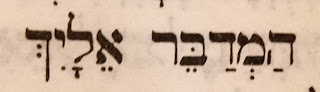
Suomentaisin tekstin vapaasti seuraavasti: Jeesus sanoi naiselle: minä olen (se) autiomaa Jumala, minä olen hän.
I'd like to translate it like this: Jesus said to the woman: I am the wilderness God, I am he.
I'd like to translate it like this: Jesus said to the woman: I am the wilderness God, I am he.
Tulkinnanvaraiset sanat näyttävät olevan:
Two words seem to be ambiguous:
Two words seem to be ambiguous:

Katsotaanpa sanakirjaa:
Let's look at the lexicon then:

Sama sana näyttäisi tarkoittavan sekä "autiomaata" että "suuta"/"puhetta" (ilman He-konsonanttia). Kumpaankin sanaan kätkeytyy sana דבר eli "sana". Autiomaa oli Jumalan ilmestysten ja puheiden/sanojen paikka. Tähden (*) selitys jälkimmäisen sanan kohdalla (yllä olevassa kuvassa) kuuluu: "oletettu sana tai muoto, joka ei esiinny Raamatun hepreassa tai arameassa", ja kuitenkin näyttäisi siltä, että kääntäjät ovat käyttäneet juuri tätä vaihtoehtoa (puhua) Joh. 4: 26: ssa.
The same word (without He) meaning both "wilderness" and "mouth"/"speech". In both of those words there is a word דבר meaning "word". God appeared and spoke his words in the wilderness. An explanation to the star (*) of the latter word (in the picture above) is: "a word or a form, which doesn't appear in the Hebrew or the Aramaic Bible", and yet it seems to me that this alternative (to speak) has been used in John 4: 26.
Tarkkaavainen lukija huomaa, että vokaalimerkit tekstikuvassa ja sanakirjakuvassa eivät vastaa toisiaan, mutta on muistettava myös se seikka, että alunperin niitä ei ole ollut ollenkaan.
An attentive reader may find that the vowel signs in the text picture and the lexicon picture do not match, but it's also good to remember that at first there were no vowels in Hebrew at all.
"Minä puhun sinulle" = אני מדבר אליך
(google-kääntäjän mukaan)
Siis keskimmäisen sanan edestä puuttuu He-konsonantti, joka yhdessä Patah-vokaalin ja seuraavan konsonantin sisällä olevan pisteen kanssa toimii substantiivien yhteydessä määräävänä artikkelina. Keskimmäinen sana edustaa tässä nyt verbiä, mutta en löydä siitä kuitenkaan verbeille tunnusomaisia taivutuspäätteitä.
Yksinkertaisimmin kyseinen lause voidaan sanoa hepreaksi: אני לך eli "minä sinulle" (Luuk. 23: 43).
"I speak to you" = אני מדבר אליך
(according to the google translator)
You see that there is no He-consonant before the second word, and He with a Patah-vowel and a dot in the following consonant forms a definite article with substantives. The second word represents a verb now, but however I can't find in it the characteristic endings to the first person in singular.
The easest way to say this sentence in Hebrew is:
אני לך or "I to you" (Luke 23: 43).
Minua miellyttää autiomaa-vaihtoehto enemmän, koska ennen noita tulkinnanvaraisia sanoja tekstissä on persoonapronomini אני , joka merkitsee "minä (olen)", ja koska Jeesus näyttää kertaavan ja vahvistavan viestinsä "autiomaan Jumalasta" samarialaiselle naiselle sanoillaan אני הוא eli "minä olen hän" (yks. 3. mask.).
I prefer the alternative of "wilderness", because before those ambiguous words there is a personal pronoun אני meaning "I (am)", and moreover Jesus seems to repeat and ratify his message of "God of the wilderness" to the Samaritan woman with his words אני הוא or "I am he" (the third, masculine in singular).
Mikä sitten on "autiomaan Jumala"? Mielestäni hän ei ole mikään muu kuin se Jumala, joka ilmestyi Moosekselle autiomaassa palavassa pensaassa ja sanoi nimekseen "MINÄ OLEN" eli EHJEE! Autiomaassahan Jumala kasvatti myös Israelin kansaa 40 vuotta. Samoin erämaassa alkoi Jeesuksen palvelusaika, ja yksinäiset ja syrjäiset seudut tarjosivat suojan ja kodin hänelle, jolla ei ollut paikkaa, mihin päänsä kallistaisi (Matt. 8: 20). Myös Ilmestyskirjassa esitetylty "vaimo", pakenee "lohikäärmettä" erämaahan (Ilm. 12: 15 - 18).
What do you think what is "the God of the wilderness"? I think he is nothing else but the God, who appeared to Moses by the burning bush and informed that his name is "I AM" or EHYEH! God educated also his people 40 years in the wilderness. In the beginning of his mission Jesus stayed in the wilderness, and in lonely and desolate areas he spent his nights, for he had not where to lay his head (Matthew 8: 20). Even the woman of Revelation escapes the dragon into the wilderness (Rev. 12: 15 - 18).
Kreikankielisessä käännöksessä ei näy ajatusta "autiomaan Jumalasta", vaan siinä kerrotaan ainoastaan "puhumisesta". Autiomaa on kreikaksi έρημος, ja tuota sanaa on turha etsiä seuraavasta kreikankielisestä käännöksestä.
In the Greek version there is no idea of "God of the wilderness" but only words telling about "speech". Wilderness is in Greek έρημος and you may seek it in vain from the following Greek translation.

Samaa voi sanoa myös monesta muusta käännöksestä. Mutta ilokseni löysin muutaman version, joissa on osattu yhdistää Jeesus Ehjee-nimeen (Minä Olen). Rinnastus näkyy sanojen korostuksena.
It's the same thing with other versions, too. But I was delighted when I found some translations connecting Jesus with the name Ehyeh (I Am). It's done by stressing the words.
Webster: "Jesus saith to her, I that speak to thee am [he]."
SweFolk1998: "Jesus sade till henne: "Det Är Jag, den som talar med dig."
MKJV: "Jesus said to her, I AM, He speaking to you. "
Jubilee 2000: "Jesus said unto her, I AM that speak unto thee."
Johannes kirjoitti: "Ei kukaan ole Jumalaa milloinkaan nähnyt; ainokainen Poika, joka on Isän helmassa, on hänet ilmoittanut" (Joh. 1: 18). On vain yksi Luoja, Ehjee ja yksi Lunasta, Jeesus!
John wrote: "No man hath seen God at any time; the only begotten Son, who is in the bosom of the Father, he hath declared [him] (John 1: 18). There is only one Creator, Ehyeh and one Redeemer, Jesus!
Jeesus on KUOLEMAN VOITTAJA (Joh. 10: 17, 18), "VÄKEVÄ JUMALA" (Jes. 9: 5), siksi hänkin voi sanoa: MINÄ OLEN. Hauta merkitsi hänelle vain sapatin lepoa! Kuolema ei kuitenkaan voittanut ikuisesti olevaa Ehjee-Jumalaa, sillä hän OLI silloinkin, kun Jeesus nukkui Joosefin haudassa.
Jesus is the CHAMPION OF DEATH (John 10: 17, 18), "THE MIGHTY GOD" (Isa. 9: 5), therefore even he may say: I AM. The grave was just rest of the Sabbath for him! Death couldn't defeat Eheyh, for he did exist even when Jesus rested in the tomb of Joseph.
Tilaa:
Blogitekstit (Atom)